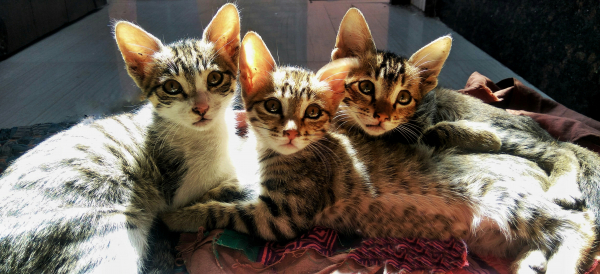
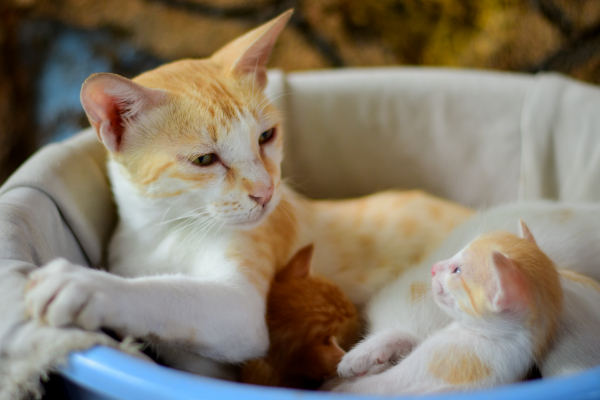
Kittens, as well as a number of other animal offspring, are born blind. Their eyes open around the tenth day of their life and only after another week, they are fully functional. Even though the sight in a cat belongs among the best-developed senses, cats are slightly short-sighted for their whole lives.
Kittens, as well as a number of other animal offspring, are born blind. Their eyes open around the tenth day of their life and only after another week, they are fully functional. Even though the sight in a cat belongs among the best-developed senses, cats are slightly short-sighted for their whole lives.
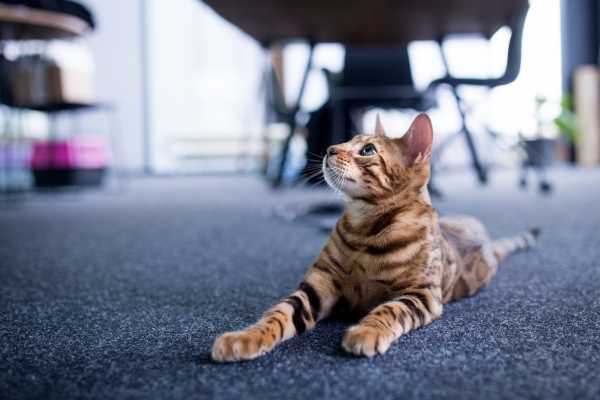
Cat’s sight has the greatest sharpness when observing at a distance of two to six meters. But what happens right in front of its nose, the cat recognises rather through smell or using its whiskers, same as in the first days after the birth, when it’s directly dependent on these senses. What causes that?
Cat has limited eye mobility to the sides comparing to humans and also a smaller field of view. While we have about 220 degrees, cats have 205 degrees. However, it can better focus even on the edges of the field of view, because its eye lens is more bent. It also compensates it by a greater degree of spatial vision, which is for it, as for a hunter of small rodents in uneasy terrain, a great advantage.
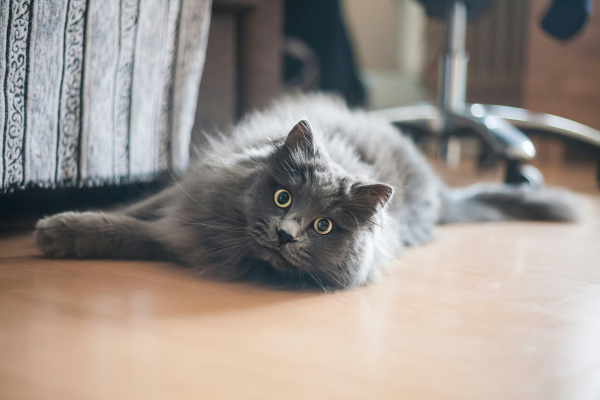
Cats can also see really well in the dark. How come? Their cornea is more convex, so it captures more light beams. The pupil dilates depending on the amount of light. The less there is, the larger the pupil gets. It can cover almost the entire iris and thereby it lets maximum amount of light in the eye. This again corresponds with the life rhythm of the cat. Since it often hunts at twilight or in the dark. Under direct light, we can hardly see the pupil. It pulls back into a thin strip to protect the sensitive retina.
This brings us to another difference. While people have their pupil round under every light, the cat’s pupil pulls back into an elliptical shape, a thin strip. This happens, because it is closed by two muscles from the sides.
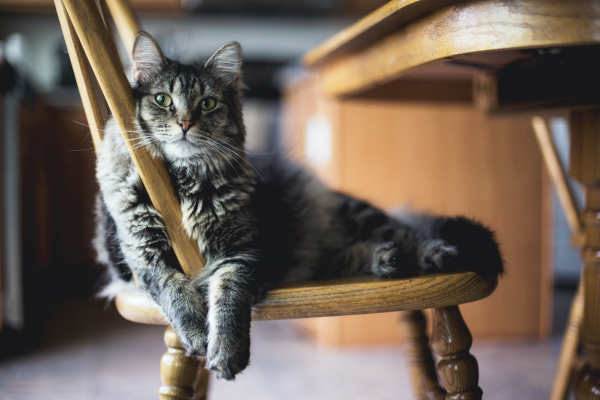
Cat’s eye is unique since a cat, as the only animal, has one extra vascular layer behind the retina - the so-called tapetum lucidum. It is composed of layers of reflective cells, a kind of “mirror”. The beams that once pass through the retina, reflect from it on the second reflective layer and they stimulate the receptors again. You could say, that every beam of light is used twice. That’s why cats need only a minimum amount of light for seeing. This reflective layer is also responsible for the effect of shining cat eyes.
When it comes to the colour seeing of cats, we still don’t understand it completely. However, it is deemed, that cats don’t put too much weight on colours. For example, rather than by colour, the kittens choose toys depending on whether they’re moving, making a sound or because of higher temperature. So far, we’ve only found that cat eyes contain cones that react to blue, green and yellow colour, while cones for red are missing completely.
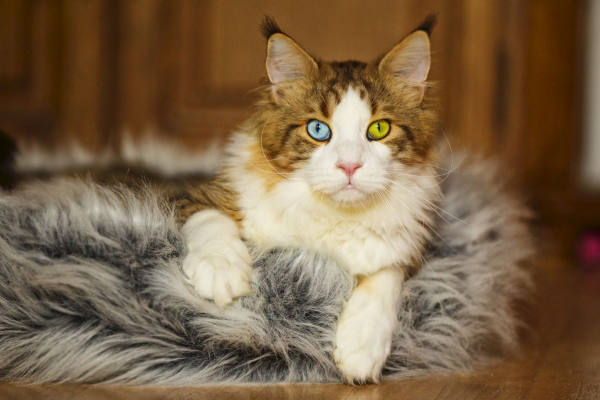
From humans, the cat differs by the fact, that its eye has also a third eyelid, a winking membrane. It is only a thin membrane that constantly moistens and cleans the eye. That’s why cats almost don’t have to blink. This applies to cats around the whole world. What distinguishes the fluffy guys between them is the shape of the eye and their colour. Particularly the eye colour, next to slight deviations from head anatomy, is one of the important characteristics of the individual breeds.
Whether you’re rearing a cat anywhere, the cat’s eyes are an incredible organ without any doubt, which surpasses human eyesight in many respects :).
Kočky jsou od přírody šelmy, které milují pohyb venku, kde je spousta vjemů a příležitostí k lovu. Jsou ale také oblíbeným domácím mazlíčkem, který může bez problémů žít i v malém bytě. Přinášíme několik tipů, aby kočce žijící uvnitř nic nechybělo.
Pokud přemýšlíte o tom, že byste si domů rádi přinesli nového čtyřnohého člena rodiny, možná vás napadla adopce jako jedna z možností. V českých útulcích je spousta pejsků, kteří touží po teple domova a jeden z nich je možná opravdu pro vás ten...
Kočky jsou poměrně samostatná zvířata, a to zejména v péči o svůj zevnějšek. Zdravou kočku tak stačí jednou za čas vykartáčovat a máte hotovo. Lesklý a krásně vypadající kožíšek svědčí o pevném zdraví. Co ale dělat v případě, že má vaše kočka...
Svatý Valentýn je svátkem lásky, ale i přátelství. To však neznamená, že se týká jen lidí. Oslavte svátek svatého Valentýna i se svým psím parťákem a oplaťte mu jeho bezpodmínečnou lásku a přátelství. Přinášíme vám několik tipů, jak si společný...
Že má kočka 9 životů? Bohužel má jako každý jiný živý tvor život jen jeden, a i proto je kočkám potřeba věnovat tu nejlepší péči, aby po našem boku žily co nejdelší a nejspokojenější život. Při správné péči (a dávce štěstí) může s námi v domácnosti...
Rozhodli jste udělat krok k uchovnění své kočky a nyní se připravujete na její první březost? Březí kočce je potřeba poskytnout jen to nejlepší, aby donosila zdravá a prosperující koťátka. Zapomínat by se nemělo na kvalitní výživu ani dostatek...
Nové koťátko přináší do našich domácností spoustu radosti. Ale také odpovědnosti za jeho zdraví. Přestože kastrace má na kočičí zdraví spíše pozitivní dopad, je mezi majiteli stále strašákem. V tomto článku proto přinášíme odpovědi na řadu otázek,...
Problémy pohybového aparátu netrápí jen nás, ale bolest zad nebo kloubů může potkat i naše psí parťáky. Dobrou zprávou je, že většině problémů můžeme předcházet nebo psům od bolesti co nejvíce ulevit!
I v zimě potřebuje srst vašeho čtyřnohého parťáka péči. Jeho pokožka dostává vlivem chladného počasí totiž zabrat více než v letním období. Čemu bychom tedy v péči o naše chlupáče měli věnovat zvýšenou pozornost?
V následujících měsících se spousta z nás chystá na zimní dovolenou na horách. Na dovolené stále častěji vyráží opravdu všichni členové rodiny, včetně našich čtyřnohých parťáků. Pokud na zimní dovolenou berete svého psa poprvé, měli byste se...
Od nového roku má spousta z nás velká očekávání. Leden se tak často nese v duchu vyhlížení změn k lepšímu a dávání si novoročních předsevzetí. Ta většinou zní opravdu hezky, ale u teorie to zpravidla končí. Co to zkusit tentokrát jinak? Novoroční...
Pro zimní období je čím dál typičtější proměnlivé a nevyzpytatelné počasí. Kolísání teplot, déšť, námraza a sníh mohou vašeho pejska během venčení potrápit. V zimních měsících byste proto měli věnovat zvýšenou pozornost psím tlapkám a psí imunitě.