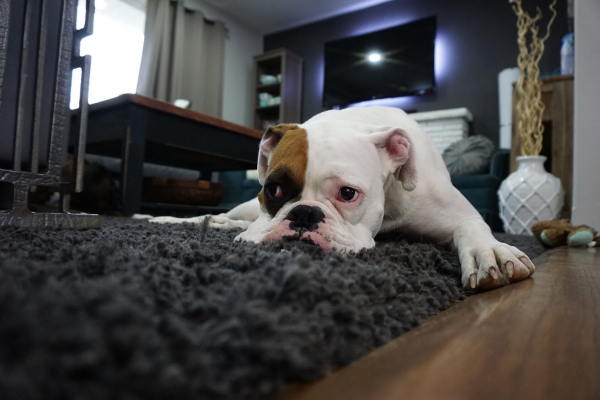
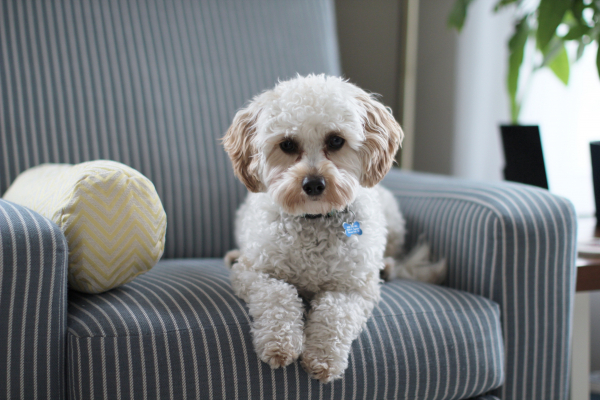
If you've noticed that your fluffy friend excessively licks and nibbles at his paws, you should not leave it like that. It might have several causes. Whether it's a psychological problem, allergy, yeast or other problem, the situation must be addressed.
Recently, I’ve noticed that my dog often licks its paws and sometimes, he nibbles at them for so long that his fingers are all red and irritated. So, I started to search for the cause and was surprised how many different reasons the nibbling of paws can have.
If your dog licks or nibbles on his paws sporadically and not regularly, it's fine. Since this activity increase his production of endorphins, so in other words, this gives him a feeling of pleasure. However, this activity might turn into a bad habit or even obsessive compulsive behaviour. It becomes a vicious circle for the fluffy guy. First, he will irritate the paws by excessive licking. They then start to itch, which makes him lick and bite them even more and this causes even more irritation. Wet spaces between the fingers then become an ideal environment for yeast or other bacterial disease or fungi.
When determining the cause, you should at first thoroughly examine the dog’s paws and exclude stuck thorns, thistles and other foreign objects as well as cut or similar wounds. If you don't find anything, rather visit the vet. They will test a skin sample or treat an infection or prescribes antibiotics. I can also recommend you a product with an anti-itching effect. It definitely won’t hurt either, if you bathe the dog in a disinfection shampoo.
One of the causes of itchiness of the paws may therefore be yeast, which thrives in the damp spaces between the fingers. So, after every walk in the rain or wet, it’s better to wipe the dog’s paws. If your fluffy friend has dense tufts of hair in between the fingers, rather dry them even in the summer after bathing, so that his paws won’t get damp. You can identify yeast according to a reddish and festering space between the fingers or red-and-black secretion that may colour also the hair of the paws.
The dog may have itchy paws also due to an allergy. You can therefore try to change his diet, to replace it with a hypoallergenic grain-free variant. Fortunately, this worked for us and after we started using hypoallergenic granules, the biting of the paws stopped. However, it doesn’t always have to be a food allergy. Then it’s necessary to perform tests for allergens or try to exclude possible causes like detergents, dust, pollens, mites and the like.
A hormonal disease may be responsible for itchy paws, such as reduced function of the thyroid gland, autoimmune skin disease, inflammation of the nail bed, parasitic diseases or fungi. However, the true cause can be identified only by a veterinarian.
Biting and licking of the paws, however, may not be caused only by itchiness. The reason for it may be also psychological discomfort of the dog such as stress, boredom or separation anxiety.
Whether it's any cause, it always applies that you should prevent the dog from licking and nibbling on its paws as soon as you find out about it. When you caught him doing it, try to distract him with a game, for instance. Shouting at him won’t probably help much. On the contrary, putting on a protective shield or shoes can be effective. I personally do not recommend shoes too much, because the paws can’t adequately breathe in them. For me personally, the best thing to do when finding about irritation is to visit a veterinarian and at least to consult the condition with them. This way, you can considerably shorten the search for the cause and relieve the dog from the issue earlier.
Have you also had trouble with paws biting of your fluffy friend? And did you manage to successfully resolve it?
Kočky tohoto plemene jsou inteligentní, komunikativní a hlavně velmi společenské. Na člověka si vytváří vazbu opravdu velmi silnou. Přízeň si krom milé povahy dokáží lehce získat i svým exotickým a vznešeným vzhledem.
V současné době dbáme na zvýšená hygienická opatření. Jakmile přijdeme z venku, sundáváme svršky, zujeme boty a umýváme si ruce. Pokud s námi přichází také psí společník, nesmíme zapomínat ani na něj. Hrozí totiž, že nám vir zanese domů. Jak se o psa v...
Jaro je tu a na svět začínají přicházet koťata. Pro mnoho z nás to může být novou zkušeností. Pojďme se proto podívat s chovatelkou sibiřských koček Helenou Rückerovou na to, co koťata ve svých prvních chvílích života potřebují a jak kočce můžeme...
Je jasné, že letošní Velikonoce nebudou probíhat tak, jak jsme zvyklí a některých tradic se budeme muset holt vzdát. Svátky budeme trávit doma v kruhu těch nejbližších, tak proč do toho nezapojit i naše kočičí společníky?
V době, kdy musíme trávit většinu času doma, nás i naše mazlíky může lehce přepadnout nuda. Jak nespadnout do stereotypu a volný čas využít smysluplně prací se psím parťákem? Jak pesana unavit i bez dlouhých vycházek venku?
Pobyt v karanténě znamená změnu životního stylu. Najednou je spousta času na koníčky, dodělává se, na co nebyl dříve čas, jen všechno probíhá na omezeném prostoru. S pejskem se najednou potkáváme velmi často a zjišťujeme, že se styl života změnil i...
Jaro je tu a s ním i čas na podporu imunity a detoxikaci těla. V zimě se totiž v těle hromadí nejvíce toxinů a zátěž představuje i změna počasí. Jak psí imunitu zbytečně nezatěžovat, a naopak ji podpořit?
V USA i některých evropských státech si můžete registrovat psa, kočku nebo i jiného mazlíka jako citového společníka. Zvíře s takovým statusem pak má oproti obyčejným mazlíkům některé výhody. Mezi asistenční psy se ale nepočítá.
O kočkách se často říká, že jsou velmi empatické a dokáží vycítit, jak se lidé cítí nebo že je něco bolí. Je jasné, že soužití s nimi zlepšuje kvalitu našeho života i naše zdraví. Dokáží ale naši kočičí společníci lidskou bolest cítit a reagovat na ni?
Hoopers je poměrně nová psí sportovní disciplína. Možná, že jste o ní tedy ještě ani neslyšeli. Překážky jsou koncipovány s minimálními nároky na pohybový aparát psa i psovoda. Hodí se tak i pro starší čtyřnohé mazlíčky i psy pohybově ne zcela zdatné.