How can you tell that your dog is overweight or that they are even starting to become obese?
The most frequent reason why your dog starts to gain weight is simple, as in most of people: they consume more energy than they spend. Some owners wave their arm at a well-intended warning that their pet has gained weight, stating that the dog is well-fed, as they say, therefore well-built as well. Unfortunately, obesity and heavier excess weight can cause major health issues to the dogs and even shorten the length of their lives.
The easiest way how to keep a dog in an optimal weight range is to grant them enough exercise and to stick with the right feeding rations. Beware of various rewards during training in the form of dog treats: even those contain calories and if the dog eats greater amount of these during every walk, it may be precisely those that are the cause of their weight gain. That’s why even in the case of rewards you should keep to reasonable amount or opt for the diet versions.
The risk of obesity may increase in the case that your dog or female dog are neutered. Some dog breeds even have a predisposition for excess weight – for example, Labrador owners will probably confirm that their four-legged friends sometimes do have too much of an appetite and in comparison with other dog breeds, this one has a greater tendency to become overweight.
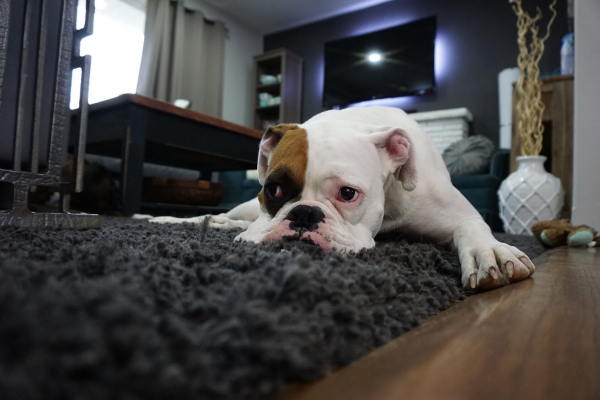
How can you tell that a dog is obese or that they are suffering from excess weight? In case of an optimal weight, the dog should have palpable ribs and from the view from the side, their abdomen should be slightly tightened. At the same time, they should have a visible narrowing in the waist area. Upon the view from above, the shape of their body should remotely resemble an hourglass. But this is only a referential method to determine excess weight and that’s the reason why you should consult a veterinarian in case you have any doubts about ideal weight of your pet and if you’re pondering whether they suffer from obesity.
One of the most frequent definitions of obesity in a dog says that their weight is 15% greater than the optimum. However, the range of ideal weight may vary even by several kilograms in different breeds so it’s not possible to rely entirely on this principle. Besides, in case of crossbreeds, you won’t find any tables with ideal weight. That’s why, when assessing obesity, also the amount of subcutaneous fat is considered, that is, also the dog’s appearance that I’ve described above.
Same as in the case of us, people, dog’s metabolism may slow down with growing age.
That’s why many dogs that had been slender when young, grow fat only after their fifth year of age. Therefore, it is appropriate to purchase pet food that contains all the necessary substances for the correct functioning of their organism, but that has less calories than food for adult dogs.
Again, same as with people, it is true that the greater the excess weight, the worse and longer the process for the dog to get back in shape. Therefore, in case you have any doubts whether your dog is in ideal weight shape, rather consult a veterinarian and start with your dog’s weight loss as soon as possible. You will save yourself and the dog a lot of trouble. However, it is good to remember that you should start gradually, first with shorter – but more frequent – walks and then extend both their duration and length. Excess weight won’t disappear by a wave of a wand, but not even if you impose a tough training regimen on the dog. This could harm them in the end. More on how to go about it next time.
Kočky tohoto plemene jsou inteligentní, komunikativní a hlavně velmi společenské. Na člověka si vytváří vazbu opravdu velmi silnou. Přízeň si krom milé povahy dokáží lehce získat i svým exotickým a vznešeným vzhledem.
V současné době dbáme na zvýšená hygienická opatření. Jakmile přijdeme z venku, sundáváme svršky, zujeme boty a umýváme si ruce. Pokud s námi přichází také psí společník, nesmíme zapomínat ani na něj. Hrozí totiž, že nám vir zanese domů. Jak se o psa v...
Jaro je tu a na svět začínají přicházet koťata. Pro mnoho z nás to může být novou zkušeností. Pojďme se proto podívat s chovatelkou sibiřských koček Helenou Rückerovou na to, co koťata ve svých prvních chvílích života potřebují a jak kočce můžeme...
Je jasné, že letošní Velikonoce nebudou probíhat tak, jak jsme zvyklí a některých tradic se budeme muset holt vzdát. Svátky budeme trávit doma v kruhu těch nejbližších, tak proč do toho nezapojit i naše kočičí společníky?
V době, kdy musíme trávit většinu času doma, nás i naše mazlíky může lehce přepadnout nuda. Jak nespadnout do stereotypu a volný čas využít smysluplně prací se psím parťákem? Jak pesana unavit i bez dlouhých vycházek venku?
Pobyt v karanténě znamená změnu životního stylu. Najednou je spousta času na koníčky, dodělává se, na co nebyl dříve čas, jen všechno probíhá na omezeném prostoru. S pejskem se najednou potkáváme velmi často a zjišťujeme, že se styl života změnil i...
Jaro je tu a s ním i čas na podporu imunity a detoxikaci těla. V zimě se totiž v těle hromadí nejvíce toxinů a zátěž představuje i změna počasí. Jak psí imunitu zbytečně nezatěžovat, a naopak ji podpořit?
V USA i některých evropských státech si můžete registrovat psa, kočku nebo i jiného mazlíka jako citového společníka. Zvíře s takovým statusem pak má oproti obyčejným mazlíkům některé výhody. Mezi asistenční psy se ale nepočítá.
O kočkách se často říká, že jsou velmi empatické a dokáží vycítit, jak se lidé cítí nebo že je něco bolí. Je jasné, že soužití s nimi zlepšuje kvalitu našeho života i naše zdraví. Dokáží ale naši kočičí společníci lidskou bolest cítit a reagovat na ni?
Hoopers je poměrně nová psí sportovní disciplína. Možná, že jste o ní tedy ještě ani neslyšeli. Překážky jsou koncipovány s minimálními nároky na pohybový aparát psa i psovoda. Hodí se tak i pro starší čtyřnohé mazlíčky i psy pohybově ne zcela zdatné.