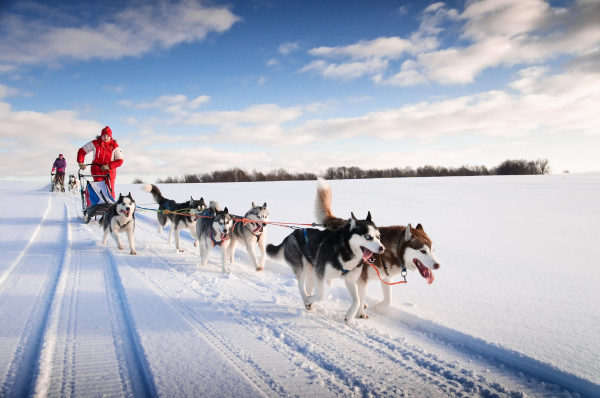
One dog isn’t enough for you and you’re looking for an excuse that will help you vindicate having a whole pack at home? One option is to become a musher - a dog sled racer. For adrenaline lovers, who’d love to ride through the landscape on a sled using sled dogs it’s an ideal dog sport :). What dogs are the most suitable for dog sled races?
One dog isn’t enough for you and you’re looking for an excuse that will help you vindicate having a whole pack at home? One option is to become a musher - a dog sled racer. For adrenaline lovers, who’d love to ride through the landscape on a sled using sled dogs it’s an ideal dog sport :). What dogs are the most suitable for dog sled races?
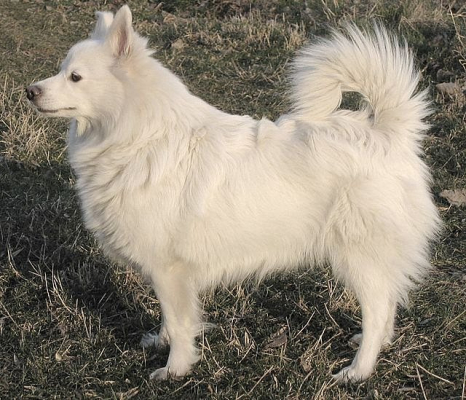
The answer is simpler, than you’d expect: all, who like to pull. From the logic of things, sled dogs are used most often. That’s why, in dog sleds, you’ll meet the Siberian Husky, the Alaskan Malamute, the Greenland Dog or the Samoyed, for example. There are also specially bred racing sled dogs. With them, it still depends on the discipline, in which the musher is competing. To put it very simple: for short to medium distances, dogs with a larger share of blood from a pointer are used and from the breeds that are similar to it, for longer distances fluffier, tougher dogs are used, like the Alaskan Huskies, for instance.
There are two main conditions of suitability: first, the dog has to like pulling and second, it mustn’t be aggressive towards others.
How difficult is the training?
A good racing dog has the desire to run and pull in them. If it needs to learn it, then something’s wrong. This doesn’t mean, that it can’t learn to pull, but it’s not as easy as the command “sit”. Every dog is simply suited for something else and it excels at what it likes. Force or strictness won’t do a thing.
What does a beginner have to do, so that it could start training?
The best way is to visit a couple of races or directly the mushers’ households and to find out as much as possible both about the given breed and its proper keeping and about the disciplines. It pays off to listen to more people and always prefer the ones, who have at least a season behind them, but also decent results. Long-term above-average performances are a proof of high quality of the dog, of care, stabling and, of course, of training as well.
Those who already have a dog and are attracted to dog sleds, should at first try, whether the dog will like it. Buy a made-to-measure harness and slowly begin to try it out. The teaching methods are various, for example, pulling chains or tyres. The most ideal way is a run with another dog. Since a more experienced dog can help your dog to understand a lot. You’ll surely find a partner for a training together in one of the money musher clubs. At first, it takes shorter and slower trainings and, most importantly, patience. And remember, that your dog must be happy during the training under any circumstances.
How do you train in months, when it’s not snowing?
The mushing season begins approximately in September and it ends roughly in March, April. So, it has the autumn and winter part. When there’s no snow, the trainings and races consist either of bikejoring (dog and a bike), scootering (scooter with one or two dogs) or canicross (running with the dog). The dog teams themselves then use a cart with small wheels instead of the sled. It’s usually home-made, but there are a couple of specialised producers. More safer motor quadricycles are also good for trainings of larger teams.
The races are governed particularly by temperature. In most cases, it applies, that races don’t take place, if the temperature is above 15 °C. The dog has no sweat gland and it could overheat. That’s why it’s necessary to adapt the training to the current temperature (to rather train early in the morning or late at night) and most importantly, to not forget to give proper amount of water to the dog before and after the training.
Where can you train?
Since there are not many trails that would be purely for training and maintained, intended only for dog teams, all the mushers train where they can. A trail prepared at least by a scooter always means a big plus. In individual disciplines, it’s much easier: they allow training on standard, maintained cross-country skiing trails. Although even here, there are certain rules: it’s better to go off-peak, to clean after the dogs, to respect the others “trail users”.
You might think, that this fun is a bit expensive, to buy all the necessary equipment, etc. But today, you have the option to just try mushing once, lessons are offered by professional mushers, who earn some extra money in their spare time this way.
Snad každý, kdo má doma psa, by chtěl mít jeho fotky, nejlépe pořízené vlastní rukou. Slíbila jsem vám proto sérii článků o focení psů, takže hurá do toho. S tím, jak zaujmout psa při focení, aby se hezky tvářil, jak ho na focení připravit, jak vybrat...
Sotva to začalo chodit, už to milovalo balóny. Ještě to nemělo tlamku dost velkou ani na golfový míček, ale odhodlaně se to snažilo zakousnout tenisák. To je celá Kulajda. Jenomže tahle zprvu roztomilá vášeň postupně přerostla v nepříjemný zlozvyk.
Houbařská sezóna začala, je na čase vyrazit do lesa a podívat se, jestli už rostou. Pokud máte jistotu, že vám pes neuteče za zvěří a že se nikde v okolí nepotulují myslivci s nabitými puškami, vezměte si ho na pomoc. Jestli utíká, zkuste ho nejprve...
Pokud cestujete, nemáte nikoho, kdo by byl ochotný pohlídat vám psa nebo kočku a hotel pro zvířata není to pravé pro vás, je tu ještě jedno řešení. Obyčejní lidé :) Takovým řešením jsem se pro Radku stala i já.
Ne vždy si můžete vzít psa s sebou na dovolenou a ne každý z nás má příbuzné nebo známé, kteří se nám o něho postarají. Jsou destinace, kam bych s sebou Kulajdu ani brát nechtěla, třeba kvůli nebezpečným parazitům nebo náročným podmínkám, jako jsou...
Zahrádky už ožily a všechen ten rybíz, jahody, ředkvičky a spousty dalších dobrot lákají nejen nás, ale i naše psy. Něco z naší sklizně jim prospívá a něco naopak vyloženě škodí. Připravila jsem pro vás stručný přehled toho, co by pes mohl v divočině...
Ať už se chystáte vyrazit kamkoli do zahraničí, před odjezdem vždy doveďte psa k veterináři, i když víte, že jste splnili základní požadavky pro cestování a de facto za hranice můžete. Mít v cestovním pasu čerstvé potvrzení o dobrém zdravotním stavu...
Všichni moc dobře víme, jak dovedou být třicetistupňová vedra nepříjemná. A teď si představte, že na sobě máte kožich a vaše tělo na všechno reaguje znatelně rychleji. Já bych v takovém počasí rozhodně nechtěla být v psí kůži. Zeptala jsem se pana...
Nevím, jak vy, ale já klíšťata prostě nesnáším. Miluju všechna zvířata včetně pavouků, hadů a škvorů, ale klíšťata prostě ne. Postrádají smysl. Možná že dřív žil nějaký živočišný druh, který se jimi živil, ale dnes už je ani nic nežere. Takže já důvody...
Já jsem se s vámi podělila o zážitky s Kulajdinou otravou, vy jste se zase podělili o svoje zkušenosti. Moc vám děkuji za rady. Napsala jsem i na jejich základě tento článek. Je určený nejen těm, kdo se starají o malé štěně, ale i ostříleným páníčkům s...