One dog isn’t enough for you and you’re looking for an excuse that will help you vindicate having a whole pack at home? One option is to become a musher - a dog sled racer. For adrenaline lovers, who’d love to ride through the landscape on a sled using sled dogs it’s an ideal dog sport :). What dogs are the most suitable for dog sled races?
One dog isn’t enough for you and you’re looking for an excuse that will help you vindicate having a whole pack at home? One option is to become a musher - a dog sled racer. For adrenaline lovers, who’d love to ride through the landscape on a sled using sled dogs it’s an ideal dog sport :). What dogs are the most suitable for dog sled races?
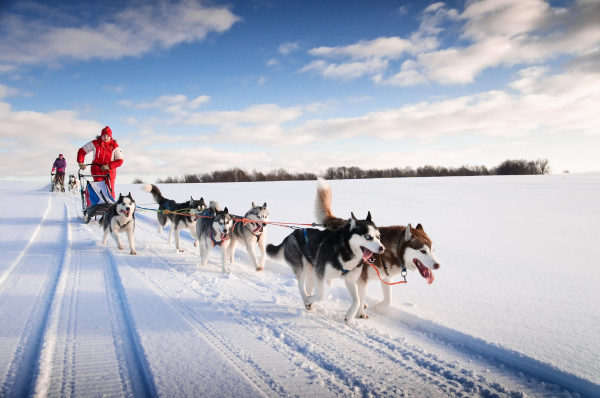
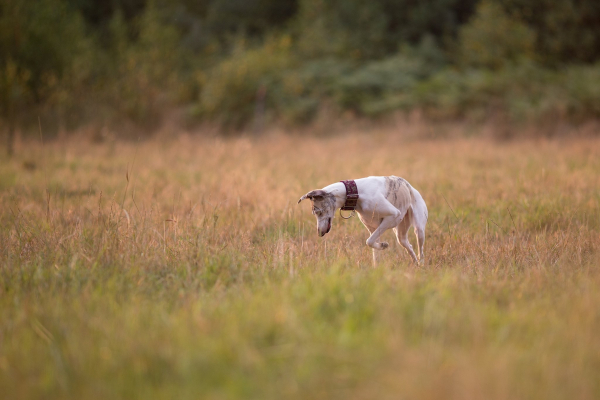
The answer is simpler, than you’d expect: all, who like to pull. From the logic of things, sled dogs are used most often. That’s why, in dog sleds, you’ll meet the Siberian Husky, the Alaskan Malamute, the Greenland Dog or the Samoyed, for example. There are also specially bred racing sled dogs. With them, it still depends on the discipline, in which the musher is competing. To put it very simple: for short to medium distances, dogs with a larger share of blood from a pointer are used and from the breeds that are similar to it, for longer distances fluffier, tougher dogs are used, like the Alaskan Huskies, for instance.
There are two main conditions of suitability: first, the dog has to like pulling and second, it mustn’t be aggressive towards others.
How difficult is the training?
A good racing dog has the desire to run and pull in them. If it needs to learn it, then something’s wrong. This doesn’t mean, that it can’t learn to pull, but it’s not as easy as the command “sit”. Every dog is simply suited for something else and it excels at what it likes. Force or strictness won’t do a thing.
What does a beginner have to do, so that it could start training?
The best way is to visit a couple of races or directly the mushers’ households and to find out as much as possible both about the given breed and its proper keeping and about the disciplines. It pays off to listen to more people and always prefer the ones, who have at least a season behind them, but also decent results. Long-term above-average performances are a proof of high quality of the dog, of care, stabling and, of course, of training as well.
Those who already have a dog and are attracted to dog sleds, should at first try, whether the dog will like it. Buy a made-to-measure harness and slowly begin to try it out. The teaching methods are various, for example, pulling chains or tyres. The most ideal way is a run with another dog. Since a more experienced dog can help your dog to understand a lot. You’ll surely find a partner for a training together in one of the money musher clubs. At first, it takes shorter and slower trainings and, most importantly, patience. And remember, that your dog must be happy during the training under any circumstances.
How do you train in months, when it’s not snowing?
The mushing season begins approximately in September and it ends roughly in March, April. So, it has the autumn and winter part. When there’s no snow, the trainings and races consist either of bikejoring (dog and a bike), scootering (scooter with one or two dogs) or canicross (running with the dog). The dog teams themselves then use a cart with small wheels instead of the sled. It’s usually home-made, but there are a couple of specialised producers. More safer motor quadricycles are also good for trainings of larger teams.
The races are governed particularly by temperature. In most cases, it applies, that races don’t take place, if the temperature is above 15 °C. The dog has no sweat gland and it could overheat. That’s why it’s necessary to adapt the training to the current temperature (to rather train early in the morning or late at night) and most importantly, to not forget to give proper amount of water to the dog before and after the training.
Where can you train?
Since there are not many trails that would be purely for training and maintained, intended only for dog teams, all the mushers train where they can. A trail prepared at least by a scooter always means a big plus. In individual disciplines, it’s much easier: they allow training on standard, maintained cross-country skiing trails. Although even here, there are certain rules: it’s better to go off-peak, to clean after the dogs, to respect the others “trail users”.
You might think, that this fun is a bit expensive, to buy all the necessary equipment, etc. But today, you have the option to just try mushing once, lessons are offered by professional mushers, who earn some extra money in their spare time this way.
Pokud si zakládáte na pěkně upravené zahradě a váš pes patří do kategorie takzvaných hrabáčů, asi vám to moc radosti nedělá. Ovšem zuřivé hrabání v hlíně nepotěší ani ty z nás, kdo nad pár dírami v trávníku přimhouříme oko. Místo chlupáče nám totiž po...
Potíže s tlapkami patří u mého pejska k těm nejčastějším. Zrovna minulý týden jsme museli na veterinu poté, co si při běhání na zledovatělém chodníku ulomil až do masa hned dva drápky najednou. Jak se o psí tlapky starat tak, abychom podobným potížím...
Jaký pán, takový pes. Asi vám už někdo řekl, že se k vám váš pes skvěle hodí a nebo dokonce, že jste si podobní. Aspoň mně se to stává často. To, že se psi někdy chovají jako lidé a jsou nám díky tomu v lecčems podobní, ale povrzuje i celá řada...
Člověk nemusí mít doma malou zoo jako já, aby přemýšlel nad případným potomstvem svých mazlíků. Rozhodnutí stát se z majitele chovatelem byste určitě neměli brát na lehkou váhu. A rozhodně to není pro každého. Moje smečka se například skládá jak z...
Nejsem kdovíjak velký koňák, ale projížďku na koni čas od času ráda podniknu. Své chlupáče obvykle nechávám doma. Přítomnost koní je totiž vyvádí z míry. Když jsem si pořizovala své čtyřnohé psí parťáky, nepomyslela jsem na to, že ne všechna plemena...
Roztomilé pískomily jsem jako malá vždycky obdivovala v pražské ZOO. Zatímco mladší bratr chtěl vždycky pospíchat na slony, hrochy, lvy a tygry, mě nejvíc bavila ta zvířata, která obvykle stojí stranou největšího zájmu návštěvníků. Kdybych neměla doma...
Každý, kdo má doma psa, určitě potvrdí, že jsou to empatická a citlivá zvířata. Jsem přesvědčená, že po náročném pracovním dni můj chlupáč prostě pozná, že jsem unavená a mám špatnou náladu a chová se jinak, než když jsem veselá a plná energie. To, co...
Jestliže máte koček víc, tak jako já, asi se shodneme, že zcela jednoznačná odpověď neexistuje. Podle mých zkušeností dokonce neexistuje ani jednoznačná odpověď na to, zda kočky vůbec hlazení mají rády. Můj nejdivočejší kočičák ho třeba vůbec...
Zimní počasí dává zabrat především psím tlapkám. Chodníky a cesty ošetřené posypovou solí tak v tomto období představují pro pejskaře a jejich psí společníky nepřítele číslo jedna. Víte, jak správně pečovat o psí tlapky v zimě? Opakování je matka...
Ptáte se, jak vypadá hyperpes? Říkám tak všem psím chlupáčům, kteří milují pohyb doma i venku a energie mají stále na rozdávání. Jsou to malí i velcí neposedové i nepolehové, věční průzkumníci a vytrvalí přinašeči balónků i nejvěrnější vítači....
S péčí o psí a kočičí chlupáče se pojí i řada mýtů. Mezi jeden takový já osobně řadím i onemocnění zvané toxoplazmóza. Jedná se o parazita, který způsobuje spíše více paniky, než skutečných problémů. Navíc se netýká jen koček nebo kočičích majitelů,...
Ježek si napichuje na bodliny jablka a kočka ráda pije z mističky kravské mléko. Tyhle dva obrázky se mi do hlavy zaryly v dětství, protože v celé řadě knížek pro děti byli ježci a kočky nakreslení právě při těchto činnostech. Bohužel se ale jak v...