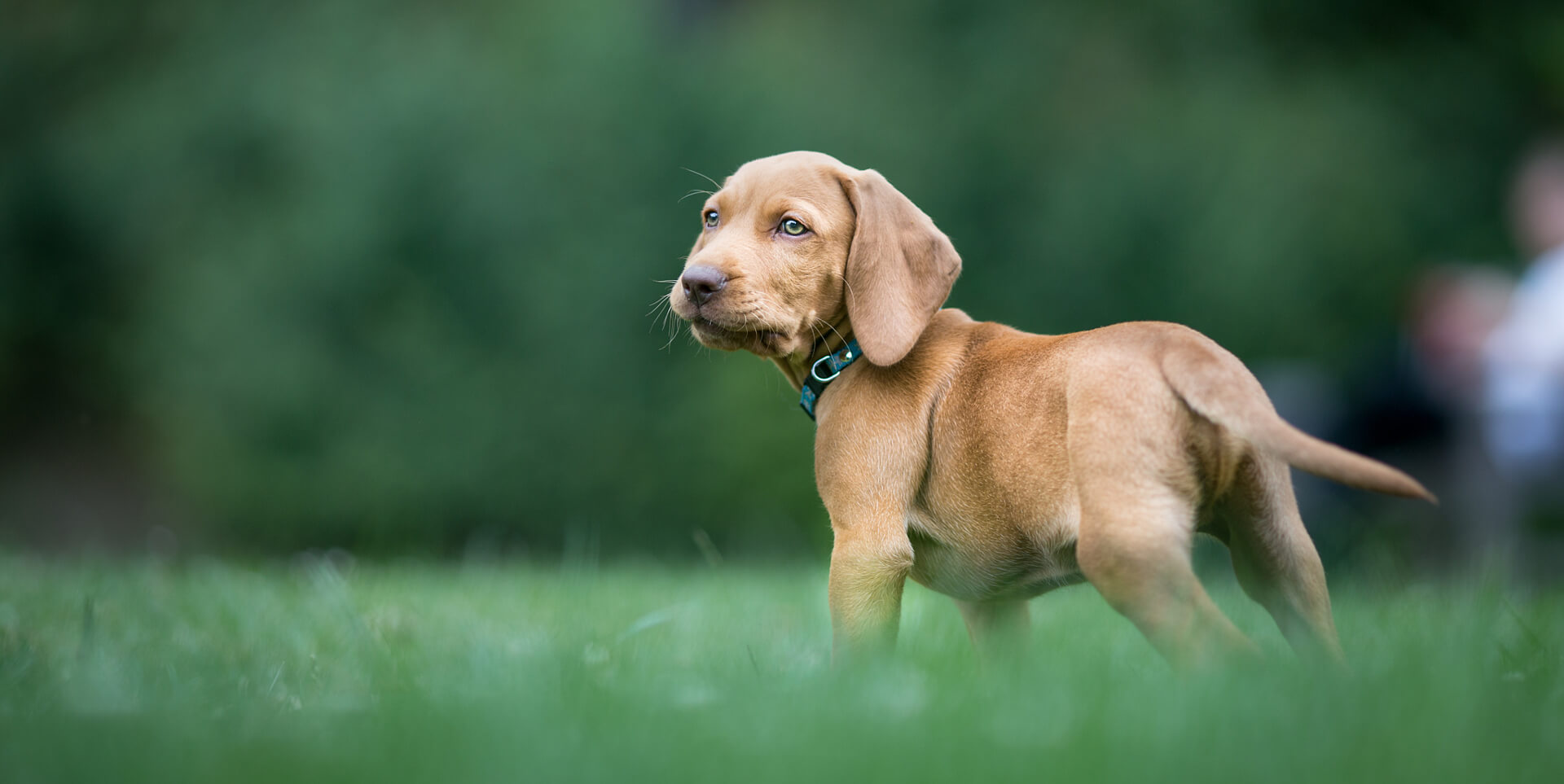
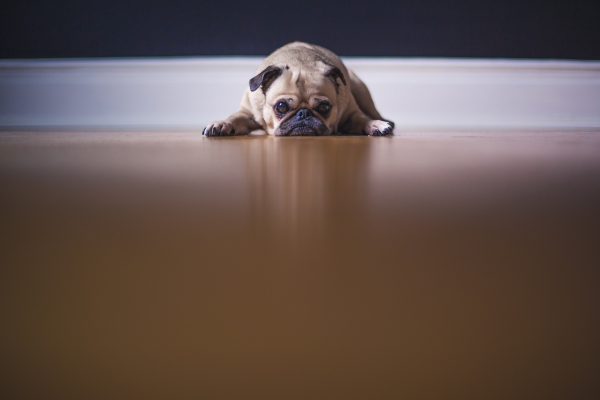
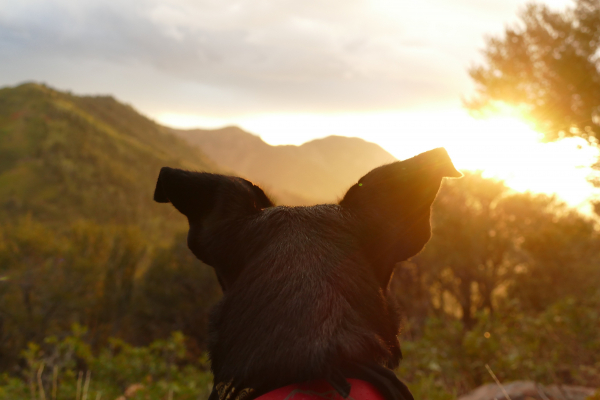
If you've noticed that your fluffy friend excessively licks and nibbles at his paws, you should not leave it like that. It might have several causes. Whether it's a psychological problem, allergy, yeast or other problem, the situation must be addressed.
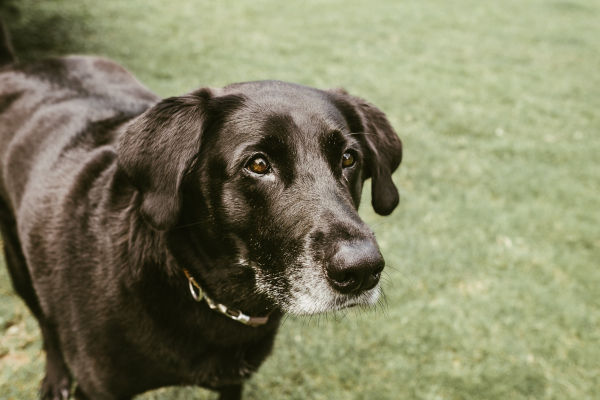
Recently, I’ve noticed that my dog often licks its paws and sometimes, he nibbles at them for so long that his fingers are all red and irritated. So, I started to search for the cause and was surprised how many different reasons the nibbling of paws can have.
If your dog licks or nibbles on his paws sporadically and not regularly, it's fine. Since this activity increase his production of endorphins, so in other words, this gives him a feeling of pleasure. However, this activity might turn into a bad habit or even obsessive compulsive behaviour. It becomes a vicious circle for the fluffy guy. First, he will irritate the paws by excessive licking. They then start to itch, which makes him lick and bite them even more and this causes even more irritation. Wet spaces between the fingers then become an ideal environment for yeast or other bacterial disease or fungi.
When determining the cause, you should at first thoroughly examine the dog’s paws and exclude stuck thorns, thistles and other foreign objects as well as cut or similar wounds. If you don't find anything, rather visit the vet. They will test a skin sample or treat an infection or prescribes antibiotics. I can also recommend you a product with an anti-itching effect. It definitely won’t hurt either, if you bathe the dog in a disinfection shampoo.
One of the causes of itchiness of the paws may therefore be yeast, which thrives in the damp spaces between the fingers. So, after every walk in the rain or wet, it’s better to wipe the dog’s paws. If your fluffy friend has dense tufts of hair in between the fingers, rather dry them even in the summer after bathing, so that his paws won’t get damp. You can identify yeast according to a reddish and festering space between the fingers or red-and-black secretion that may colour also the hair of the paws.
The dog may have itchy paws also due to an allergy. You can therefore try to change his diet, to replace it with a hypoallergenic grain-free variant. Fortunately, this worked for us and after we started using hypoallergenic granules, the biting of the paws stopped. However, it doesn’t always have to be a food allergy. Then it’s necessary to perform tests for allergens or try to exclude possible causes like detergents, dust, pollens, mites and the like.
A hormonal disease may be responsible for itchy paws, such as reduced function of the thyroid gland, autoimmune skin disease, inflammation of the nail bed, parasitic diseases or fungi. However, the true cause can be identified only by a veterinarian.
Biting and licking of the paws, however, may not be caused only by itchiness. The reason for it may be also psychological discomfort of the dog such as stress, boredom or separation anxiety.
Whether it's any cause, it always applies that you should prevent the dog from licking and nibbling on its paws as soon as you find out about it. When you caught him doing it, try to distract him with a game, for instance. Shouting at him won’t probably help much. On the contrary, putting on a protective shield or shoes can be effective. I personally do not recommend shoes too much, because the paws can’t adequately breathe in them. For me personally, the best thing to do when finding about irritation is to visit a veterinarian and at least to consult the condition with them. This way, you can considerably shorten the search for the cause and relieve the dog from the issue earlier.
Have you also had trouble with paws biting of your fluffy friend? And did you manage to successfully resolve it?
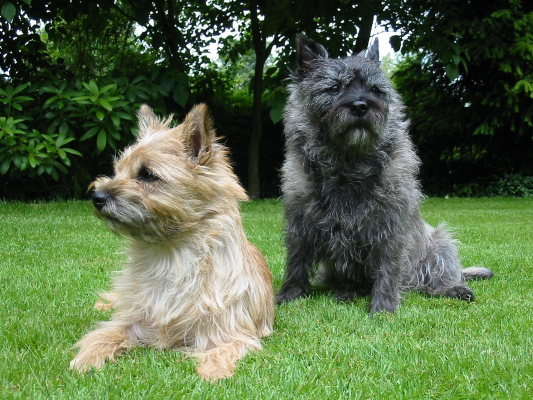
I když má kernteriér proslulé sebevědomí teriérů, je velmi přizpůsobivý a patří mezi ty poslušnější. Bývá skvělým společníkem a výborně poslouží i jako hlídač. Spokojený ovšem bude jen s dostatkem pozornosti a pohybu.
Malá psí plemena se v lecčems liší od těch velkých. Pokud chceme mít svého mini psíka zdravého a prosperujícího, musíme zohlednit jeho speciální potřeby i při výběru krmiva.
Každý zbožňuje štěňata. Kdo by je nemiloval, že? Jsou roztomilá, hravá a plná energie. Velmi často ale přehlížíme smutný fakt, že útulky jsou plné starších psích chlupáčů, kteří stejně tak jako ty malé psí kuličky čekají na svůj nový domov a pána,...
Máte také své psí hrdiny? Tím mým je bezpochyby pes Artur, jehož příběh mě nedávno naprosto dojal. Artur musel urazit 430 mil, aby našel nový lepší domov. V Ekvádoru, odkud původně pochází, narazil na Mikaela Lindorda, který ještě tou dobou netušil, že...
Letos připadá Mezinárodní den králíků na 22. 9. Nezapomeňte na své ušáky a pořádně to s nimi oslavte! A pozor, svátek není jen oslavou domácích králíků, ale slouží i jako upozornění na špatné životní podmínky chlupáčků.
Jaká strava by mohla být pro psy (i kočky) přirozenější než syrové maso. Není to ale tak jednoduché, jak se může zdát. I přirozená strava musí být bohatá a vyvážená.
Když se vám psí mazlík otráví, rychlé a vhodně zvolené kroky mu mohou zachránit život. Víte, čím vším se může otrávit? Jak otravu vlastně poznat a co dělat?
Znáte Kitten Lady? Je to americký záchranný a advokátní projekt zaměřený na změnu světa pro ty nejmenší kotěcí sirotky. Vlastně jde o mladou blondýnku zachraňující denní koťátka a vedoucí osvětový program po celých Spojených státech amerických.
Křečci, morčata i osmáci už vás nudí, nebo na ně prostě nemáte dostatek času? Rádi byste nějakého neokoukaného mazlíčka, kterého doma nemá každý druhý? Třeba pro vás bude to pravé ježek bělobřichý. Je to samotář aktivní převážně v noci.
Léto ještě zdaleka nekončí a vy můžete využít poslední teplé víkendy k výletu pod stan. Ne všichni pejsci ovšem kempování dobře snášejí. Na co byste se měli připravit a na co se můžete těšit, když vyrazíte se psem pod stan?
Ernesta Hemingwaye jistě znáte jako držitele Pulitzerovy ceny, Nobelovy ceny za literaturu a jako autora světoznámých románů Stařec a moře nebo Komu zvoní hrana. Znáte ho ale i jako milovníka a obdivovatele koček?