How to train your dog to mount escalators quickly and safely?
Traveling with a dog in the city is stressful for many dog owners. One of the reasons may be the fear of riding escalators. If the dog is not accustomed to them since young age, he can have issue with it as an adult. Even in the case that your dog aces it, it’s necessary to be careful.
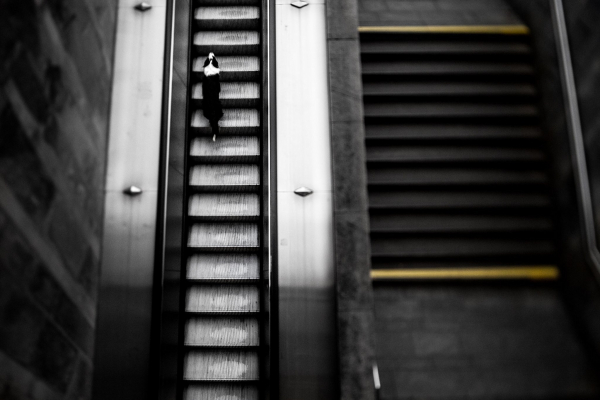
When moving around the city, whether it’s the city public transport or shopping malls, where dogs are usually allowed today, most dogs will inevitably encounter escalators. Overcoming the escalators, as well as any other barriers that are unnatural for our four-legged canine sidekicks, can oftentimes be an issue. An escalator still constitutes an obstacle for the dog, that he can learn to overcome. However, it’s necessary to gradually get him used to it first. The movement on escalators will then be safe and won’t stress you or him.
If you have a little puppy that you’d like to get used to the city environment and travelling from an early age, you won’t be able to avoid an escalator. But first, consider if the dog is not too small, so that it was not dangerous for him or that it wouldn’t cause him an unnecessary bock for a lifetime. You can always take a little puppy in your arms or put it in a dog bag. The advantage of that is, that he will get familiar with the noise the escalator makes without being confronted with boarding and exiting from the escalator.
As soon as the dog masters the basic commands and walking on a leash, it’s the right time to set out for training. First, you need to select a less noisy and shorter escalator, on which he is not threatened by an injury and which are not too busy. Before you start to practice the riding itself, make sure that the dog’s collar is well fastened. Chasing an animal around a station vestibule is an experience that you should rather avoid, trust me:). Pick such a leash that will allow your dog to freely move by your foot, but at the same time, he won’t be able to run away from you.
Gradually make the dog familiar with escalators. Head towards the escalator, but don’t rush anywhere. The dog doesn’t have to keep directly at your foot, let him choose his own pace. Once the dog sees the stairs and starts to slow down, motivate him with treats. Make one or two steps and then repeat the whole action several times from the beginning. Combine it with several basic commands and reward him. Don’t push the dog to board the escalator and give him enough time to get to know the environment.
Board the escalator only when the dog isn’t afraid to come close. Board it at the same time together with your dog. It may happen that the dog will stop at the last minute. In such case, it’s better to repeat the whole boarding ritual from the beginning. As soon as you succeed in boarding and both you and your dog are on the escalator :), immediately reward him and praise him. Don't be afraid to overdo it a little. The dog needs to learn, that all this is connected with a positive experience and master’s joy.
When the dog already manages to ride the escalator, you can command him to sit. Pay attention not only to the tail, to prevent the hairs from getting in between the stairs, but also to the whole of the paws and claws. When exiting, loosen the dog’s leash a little bit. As soon as the last stairs approach, my dog literally rushes off and he could unnecessarily hurt his neck, if I held him on too short of a leash. Although most dogs can handle exiting from the escalators much more elegantly, it does not hurt to think about it:).
Finally, only a couple of personal tips. Prepare a lot of treats. Rather train in two, ask one of your friends, ideally a dog owner. Prepare more time for it. There are dogs who won’t have any issue with it and you’ll be able to make it to the train to your grandma. But others will need more time to get used to it. If they can handle escalators, they can do almost anything:).
How was your first ride with a dog on an escalator? Can he handle it without greater trouble or do you prefer taking the stairs? Have you got any proven tips that you’d like to share?
Silvestr je pro mnoho lidí symbolem oslav, radosti a nového začátku. Pro zvířata ale často představuje jeden z nejstresovějších dnů v roce. Hlučné výbuchy, oslnivé světelné záblesky, nečekané vibrace i změny v rutině mohou u psů i koček vyvolat...
Vánoční čas bývá plný radosti, vůní a dekorací, které vytvářejí sváteční atmosféru. Pro naše čtyřnohé společníky však mohou představovat nečekané nástrahy. Psi i kočky jsou přirozeně zvědaví, a tak není divu, že zkoumají všechno nové. Ať už jde o...
Zima je období, kdy se náš domov stává útočištěm nejen pro nás, ale i pro naše zvířecí společníky. Venku se ochlazuje, procházky jsou kratší a většina zvířat tráví více času uvnitř. A právě proto je teď ideální chvíle dopřát jim prostředí, které dodá...
Zima je pro psy i kočky obdobím zvýšené zátěže. Nízké teploty, vlhko, méně slunečního svitu a častější kontakt s infekcemi mohou oslabit jejich imunitní systém. Nepodceňovat kvalitu zimní stravy proto znamená dát organismu zvířete přesně to, co...
Zima bývá pro zvířata obdobím, kdy se mění nejen jejich denní režim, ale i potřeby spojené s hygienou. Nižší teploty, vlhko, sůl na chodnících, suchý vzduch v interiéru i omezený pobyt venku mají přímý vliv na srst, pokožku, tlapky i celkovou pohodu...
Vánoce jsou obdobím radosti, očekávání a společně prožitých chvil. A právě proto má většina z nás potřebu zahrnout do svátků i své zvířecí společníky. Pamlsek pod stromečkem, nová hračka nebo teplý pelíšek jsou milé drobnosti, kterými jim můžeme...
Zima je obdobím klidu a zpomalení, a to nejen pro lidi. Stejnou potřebu mají i zvířata. Psi i kočky si v chladných měsících rádi dopřávají více spánku a odpočinku, často se stáhnou do tepla domova a jejich chuť k pohybu i hře se může zdát menší....
Zima je pro starší psy a kočky náročnější než pro jejich mladší parťáky. Chlad, vlhko a méně pohybu mohou zhoršit bolesti kloubů, oslabit imunitu nebo ovlivnit trávení. Navíc se s přibývajícím věkem zvířata hůře přizpůsobují změnám teploty a rychleji...
Podzim a zima bývají pro spoustu psů náročnější období. Kratší dny, déšť, mlha a chlad nevybízí k dlouhým procházkám, právě naopak. I jindy aktivní psi se často schoulí raději do pelíšku a tváří se, že ven se přece nikomu nechce. Jenže pohyb je...
Podzim bývá obdobím, kdy se zpomaluje nejen příroda, ale i naše tělo. Stejně tak i psi a kočky po aktivních měsících vítají klidnější rytmus, více odpočinku a výživnější stravu. Právě v této době má smysl podpořit jejich organismus jemnou očistou,...
Podzim přináší nejen krásně zbarvené listí a voňavý vzduch, ale také kratší dny, méně pohybu a delší chvíle doma. A zatímco my lidé si zapálíme svíčku, uvaříme čaj a čteme knihu nebo si zapneme televizi, naše zvířata mohou podzimní období vnímat...
S příchodem podzimu se mění nejen počasí, ale i životní rytmus našich zvířat. Dny se zkracují, venkovních aktivit ubývá a společně s větší chutí k jídlu se snadno může stát, že pes nebo kočka začne nabírat kila navíc. Mnoho majitelů si této změny...