Portraits of popular breeds both at home and in the world: American Teddy - domestic guinea pig
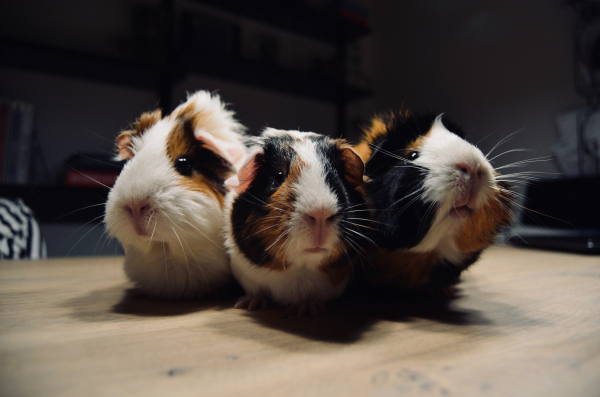
In individual rodents, we’ll find breeds that are more popular with breeders than others. One of those is the American Teddy, typical with its peculiar hair structure that gives it the appearance of a teddy bear.
The American Teddy is a domesticated form of the South American wild guinea pig. It was bred in the state of California in the 60’s of the 20th century. It quickly started being popular across whole America and later in the rest of the world as well.
It has a cylinder-shaped body, a large head on a short neck and a rounded butt without a tail. It grows to 20-36 cm and its weight is usually between 0.7 and 1.2 kg, but it can also grow up to 1.8 kg.
The breeders usually chose this cute breed primarily due to the already mentioned structure of the hair. It grows perpendicular from the body and does not have any partings or whorls. It is very dense and elastic and should not exceed 3 cm. It is very pleasant to the touch and gives the guinea pig the appearance of a teddy bear. Its clear, small round eyes and tilted ears even add to its cuteness.
Interestingly, the young ones are born with wavy hair, even with wavy tactile hairs. Particularly in the first year of their life, they change hair several times. It is said that the wavier the hair of the small guinea pig is, the better the hair will be in their adult life.
Therefore, if you choose this breed, you can’t choose the young one very well according to its appearance. Their final appearance will show after a year, sometimes only after a year and a half of their life. Sometimes, even an ugly young guinea pig can grow into a perfect beauty.
Apart from genetics, the quality of the fur is affected also by the environment, temperature, care and the composition of the food. For example, in an excessively warm home, the fur softens and thins out. It does better outdoors or in cooler conditions.
The colour of the fur may vary, even according to the country of origin and their standards for this breed. The Czech standard requires vibrant colours that should not be too mixed (the guinea pig should be of a single colour to a maximum of three colours). Especially attractive are the satin colours. With these colours, the hairs are hollow and thinner. The hair then reflects light, the colour seems more intense, darker and it’s shiny.
However, two satin guinea pigs can’t be interbred with each other, it usually results in the death of the young ones. Teddy guinea pigs were bred with rosettes in the past in order to get tougher and with smooth guinea pigs to improve the type and colour. However, interbreeding with smooth guinea pigs allegedly reduces quality of the hair.
They are very pleasant and calm in their nature. They are curious and communicative, so you definitely won’t get bored with them. You can also entertain them and yourself by various different games and brain teasers and they certainly won’t despise a caress of their plush fur, since they are also very cuddly. As a rule, not even their pups tend to be timid.
It’s necessary to take care of the American Teddy. Apart from attention, even its dense fur requires care, it’s necessary to comb out dead hair from it and dirt. The guinea pig should be bathed as little as possible, its fur loses quality this way, its toughness and elasticity.
This breed is susceptible to mildew and dandruff, so it shouldn’t live in an environment that’s too humid. In the summer months, you also need to pay attention to the damping of the fur.
Soužití dítěte a psa má mnoho benefitů a zvíře na dítě může mít velice dobrý vliv. Zároveň ale platí, že pes není hračka, a jejich vzájemný vztah vyžaduje vedení, jasná pravidla i vzájemný respekt. Přestože svou roli hraje i správná volba...
O kočkách lidé často uvažují jako o všežravcích, kteří mohou sníst opravdu cokoliv. Opak je bohužel pravdou. Kočky jsou nejen vybíravé, ale zároveň existuje celá řada potravin, které jsou pro ně nevhodné, nebo dokonce nebezpečné. Proto si vždy dobře...
Voda a léto patří k sobě – a mnoho psů miluje koupání a stejně jako jejich majitelé během horkých dní uvítají toto příjemné ochlazení. Ať už se chystáte k rybníku, řece, nebo moři, je důležité pamatovat na několik zásad, které zaručí, že bude koupání...
Otravy psů jsou bohužel poměrně časté a s příchodem léta a teplého počasí se riziko otravy ještě zvyšuje. Zkažené jídlo, mořská voda, sinice i jedovaté rostliny mohou ohrozit zdraví psa během chvilky. Díky znalosti prvních příznaků a včasnému zásahu...
To, že kočka není pes a má jiné nároky na výživu, už většina chovatelů ví. Přesto se dopouštějí drobných chyb, které mohou vést k nadváze, zažívacím potížím nebo nedostatku důležitých živin. Je proto dobré nezapomínat, že i kočičí stravování má svá...
Dovolená se psem může být skvělým zážitkem! Je ale dobré se na společné dobrodružství připravit. Každá změna prostředí a rutiny totiž může představovat pro zvíře větší či menší výzvu. Dovolenou je proto potřeba plánovat s ohledem na potřeby psa, aby...
Přestože kočky milují teplo a vyhřívání se na prosluněných místech, ani jim nemusí letní vedra dělat dobře. I kočkám totiž během tropických teplot hrozí přehřátí a dehydratace. V článku proto přinášíme tipy, jak kočkám v létě co nejvíce usnadnit...
Léto přináší nejen slunečné dny, ale i celou řadu rizik pro vašeho psa – od přehřátí a poranění tlapek až po skrytá nebezpečí během pobytu u vody. Abyste prožili léto bez starostí a zbytečných návštěv veterináře, je dobré myslet na bezpečnost. V...
Letní dovolené jsou pro nás časem odpočinku a vítané změny každodenní rutiny. Pro kočky může být ale váš odjezd na dovolenou stresující. Přestože jsou na rozdíl od psů více vázané na místo, ve kterém žijí, a obecně snášejí samotu o něco lépe, vaše...
Kočky jsou velmi citlivé na změny, a to platí i o jejich trávení. Občasné zažívací potíže proto nejsou ničím výjimečným, a pokud se vyskytují jen zřídka a netrvají déle než pár dní, není potřeba se zbytečně stresovat. Jestliže se jedná o silný akutní...
Stáří se nevyhýbá nikomu, ani psům. A stejně jako u lidí, i u psů přináší stáří změny v chování, návycích nebo v celkové kondici psa a mění se také jeho nároky na výživu. S přibývajícím věkem se zpomaluje metabolismus, snižuje se aktivita a mohou se...
Cestování většinou není pro kočky příliš oblíbenou činností. Jsou často fixované na svůj prostor, rutinu a pocit bezpečí. Cestování s kočkou ale nemusí být nemožné a jde to i bez velkého stresu. Musíte ale dobře znát povahu své kočky a na cestování...