How to prepare the dog for the arrival of a baby II. – after birth
Some dogs take the arrival of a new family member in a hard way. Previously, we described how to prepare them for this situation already before the baby even arrives home and today, we will take a look at the introduction itself.
Let us assume that the dog is already prepared for the contact with the child. He has thoroughly mastered the basic commands, knows the child’s often unpleasant sounds, distinguishes between his toys and the child’s toys and knows, that he is not to notice the things around the baby, such as the pram or the cot. The question is, how to introduce these two. Again, I have summarised the steps into several basic points:
1. The dog should take part in the arrival of the baby from the maternity ward
It isn’t advisable to put the dog away for several days. The dog could see the new-born as a stranger in its territory and an undesirable aggression or jealousy could arise on his part.
2. First meeting
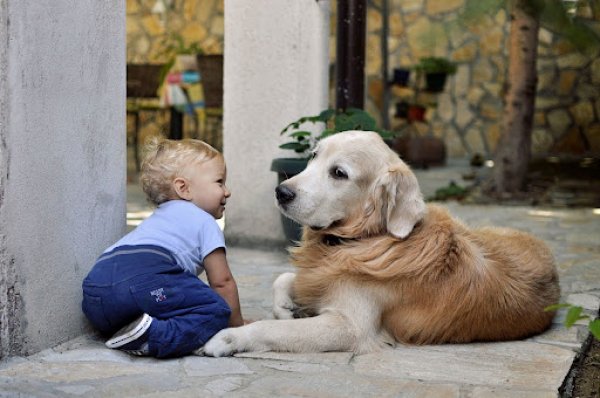
Upon the arrival to the apartment, hand the baby over to the father and first greet the dog properly. Then you can let the dog sniff the new family member, be vigilant while doing that, of course. Take care that the dog doesn’t lick the child’s face or that it doesn’t unwillingly hurt it with his paw. While doing that, you can encourage the dog by talking to him or rewarding him. The first contact is important and it should be positive for the dog.
3. Don’t neglect the dog
The dog shouldn’t get the idea, that he is being neglected because of the child. Give him as much attention as possible. If he was used to being in contact with you all the time and you will suddenly start ignoring him, this can lead to jealousy or aggression towards the baby. Even a passing stroke counts. Let him also be present at the baby’s bathing, changing of its diapers and other common activities or take him for walks with the pram. He will have all the less reasons to feel pushed away.
4. Never leave them unattended
Even the most peaceful dog may hurt the baby unwillingly. Therefore, never leave them unattended together, not even for a little while: when you’re going to pick up the phone, to open the door for visitors etc. Always take one of them with you or separate them securely.
5. Ban the dog from licking
Don’t forget that the most bacteria are located precisely in the mouth, that is, in the dog’s muzzle. Therefore, don’t let the dog lick the baby, especially not the face. A lick of the hand or the leg from time to time is ok (you can also wipe the given limb immediately) and it will strengthen the dog’s relation towards the child. This is naturally also true for the child’s toys and everything that could get into the baby’s mouth. This way, you will prevent a possible infection, mainly with gastric flus and rashes.
6. Also protect the dog from the child
Children sometimes have surprising strength and they’re not able to control it that well. That’s the reason why you should rather avoid buying heavy toys or toys with sharper edges. In case that the child would hit the dog with them, he could, even only because of a reflex, lash out or snap at the child. Also be careful so that the child doesn’t pull the dog’s tail or his ears and the like. Even if the dog doesn’t lash out, he will establish a negative relationship with the child associated with unpleasantness or pain.
Do you remember any other tips on how to easily overcome the new situation and provide security for the baby?
Odmítání potravy se nevyhýbá ani zvířatům. Naopak, nechutenství je častým problémem, se kterým se majitelé psů setkávají. Pokud pes přestane přijímat běžnou krmnou dávku, může jít o dočasnou změnu nebo známku hlubšího problému.
Adopce mazlíčka je krok, který může změnit život vám i psovi či kočce, kteří v útulku čekají na svůj vysněný domov. A přestože adopce zvířete většinou přináší mnoho radosti, je dobré počítat s tím, že představuje specifické výzvy a často vyžaduje...
Stěhování patří mezi velmi stresující zážitky nejen pro nás, ale především pro naše kočičí společníky. Kočky jsou teritoriální zvířata, která milují rutinu a známé prostředí. Změna domova pro ně znamená ztrátu všech jistot – známých pachů, zvuků i...
Soužití dítěte a psa má mnoho benefitů a zvíře na dítě může mít velice dobrý vliv. Zároveň ale platí, že pes není hračka, a jejich vzájemný vztah vyžaduje vedení, jasná pravidla i vzájemný respekt. Přestože svou roli hraje i správná volba...
O kočkách lidé často uvažují jako o všežravcích, kteří mohou sníst opravdu cokoliv. Opak je bohužel pravdou. Kočky jsou nejen vybíravé, ale zároveň existuje celá řada potravin, které jsou pro ně nevhodné, nebo dokonce nebezpečné. Proto si vždy dobře...
Voda a léto patří k sobě – a mnoho psů miluje koupání a stejně jako jejich majitelé během horkých dní uvítají toto příjemné ochlazení. Ať už se chystáte k rybníku, řece, nebo moři, je důležité pamatovat na několik zásad, které zaručí, že bude koupání...
Otravy psů jsou bohužel poměrně časté a s příchodem léta a teplého počasí se riziko otravy ještě zvyšuje. Zkažené jídlo, mořská voda, sinice i jedovaté rostliny mohou ohrozit zdraví psa během chvilky. Díky znalosti prvních příznaků a včasnému zásahu...
To, že kočka není pes a má jiné nároky na výživu, už většina chovatelů ví. Přesto se dopouštějí drobných chyb, které mohou vést k nadváze, zažívacím potížím nebo nedostatku důležitých živin. Je proto dobré nezapomínat, že i kočičí stravování má svá...
Dovolená se psem může být skvělým zážitkem! Je ale dobré se na společné dobrodružství připravit. Každá změna prostředí a rutiny totiž může představovat pro zvíře větší či menší výzvu. Dovolenou je proto potřeba plánovat s ohledem na potřeby psa, aby...
Přestože kočky milují teplo a vyhřívání se na prosluněných místech, ani jim nemusí letní vedra dělat dobře. I kočkám totiž během tropických teplot hrozí přehřátí a dehydratace. V článku proto přinášíme tipy, jak kočkám v létě co nejvíce usnadnit...
Léto přináší nejen slunečné dny, ale i celou řadu rizik pro vašeho psa – od přehřátí a poranění tlapek až po skrytá nebezpečí během pobytu u vody. Abyste prožili léto bez starostí a zbytečných návštěv veterináře, je dobré myslet na bezpečnost. V...
Letní dovolené jsou pro nás časem odpočinku a vítané změny každodenní rutiny. Pro kočky může být ale váš odjezd na dovolenou stresující. Přestože jsou na rozdíl od psů více vázané na místo, ve kterém žijí, a obecně snášejí samotu o něco lépe, vaše...