The whiskers on cats’ face are probably too noticeable to ignore them. But do you know all the places where cat’s whiskers with sense of touch are? And do you know how this comprehensive tactile body functions?
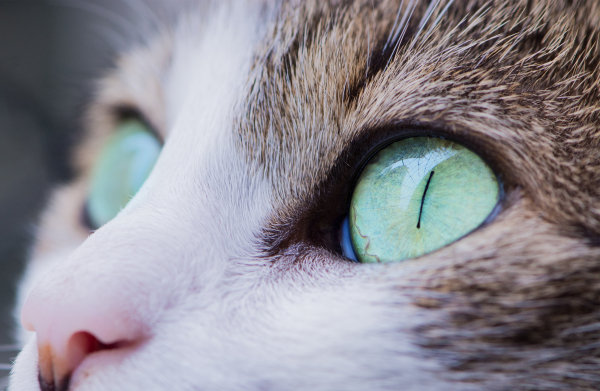
The sense of touch is one of the fundamental senses for cats. It is partially because of the fact that their vision is not very good. You have certainly noticed that cats are sensitive to touch or that they wince when something touches their whiskers. Some cats even don’t like to drink from a bowl when their whiskers touch it. There are many nerve cells and nerve endings in the skin on the entire body of the cat. The most of them are on the pad of their feet and around their muzzles. They also have tactile hair (whiskers) which are rooted as much as three times deeper in the skin than the rest of the hair. Moreover, they have large number of extremely sensitive nerve endings at their roots.
The roots of the individual tactile hair are stored in separate ligament bursas and have their own large arrector pili muscles. Let’s look closer to tactile hair which are also called sinus hair. You can find them on the upper lip, on the cheeks, the chin, above the eyes, in the armpits and on the lower side of the front paws. They are longer and thicker than the rest of the cat fur. They regularly fall out and get renewed the same way as the usual hair. But you shouldn’t cut them in any circumstances! When the cat loses some tactile hair in the natural process of renewal, it is okay. If you cut them, it becomes disoriented and it can start to crash into things and it will be rightfully restless.
You may have heard that the hair length corresponds to the widest part of the cat’s body and this helps to tell whether it can stretch into a hole. But scientists have never confirmed that. Also, the length of the cat’s hair depends on its breed. How do tactile hair work? The cat can perfectly orient in space and avoid the obstacles even in a dark environment not only thanks to its vision but thanks to its hair. It is based on observing the air flow. The tactile hair are so sensitive that they can sense the least noticeable movement. As the air flows around objects, the cat is capable of noticing the obstacles and avoiding them. Therefore, blindness is not such a big problem for cats and they can move in space quite well (at least horizontally) even without vision.
Moreover, there are four types of nerve endings in the roots of hair and when the hair touch the obstacle, the cat can sense the pressure, its direction, speed and duration. The cat is also able to sense the changes in the atmospheric pressure thanks to its tactile hair. The hair on cat’s face also reflect its mood. When they are upright, it is in a good mood and it lowers them to its cheeks for defence or when it is angry. When exploring a new object, it turns the hair forward. But it also uses its front paws when getting acquainted with new things. As you can see, it would be very difficult for cats without hair because they are an important part of their body.
Odmítání potravy se nevyhýbá ani zvířatům. Naopak, nechutenství je častým problémem, se kterým se majitelé psů setkávají. Pokud pes přestane přijímat běžnou krmnou dávku, může jít o dočasnou změnu nebo známku hlubšího problému.
Adopce mazlíčka je krok, který může změnit život vám i psovi či kočce, kteří v útulku čekají na svůj vysněný domov. A přestože adopce zvířete většinou přináší mnoho radosti, je dobré počítat s tím, že představuje specifické výzvy a často vyžaduje...
Stěhování patří mezi velmi stresující zážitky nejen pro nás, ale především pro naše kočičí společníky. Kočky jsou teritoriální zvířata, která milují rutinu a známé prostředí. Změna domova pro ně znamená ztrátu všech jistot – známých pachů, zvuků i...
Soužití dítěte a psa má mnoho benefitů a zvíře na dítě může mít velice dobrý vliv. Zároveň ale platí, že pes není hračka, a jejich vzájemný vztah vyžaduje vedení, jasná pravidla i vzájemný respekt. Přestože svou roli hraje i správná volba...
O kočkách lidé často uvažují jako o všežravcích, kteří mohou sníst opravdu cokoliv. Opak je bohužel pravdou. Kočky jsou nejen vybíravé, ale zároveň existuje celá řada potravin, které jsou pro ně nevhodné, nebo dokonce nebezpečné. Proto si vždy dobře...
Voda a léto patří k sobě – a mnoho psů miluje koupání a stejně jako jejich majitelé během horkých dní uvítají toto příjemné ochlazení. Ať už se chystáte k rybníku, řece, nebo moři, je důležité pamatovat na několik zásad, které zaručí, že bude koupání...
Otravy psů jsou bohužel poměrně časté a s příchodem léta a teplého počasí se riziko otravy ještě zvyšuje. Zkažené jídlo, mořská voda, sinice i jedovaté rostliny mohou ohrozit zdraví psa během chvilky. Díky znalosti prvních příznaků a včasnému zásahu...
To, že kočka není pes a má jiné nároky na výživu, už většina chovatelů ví. Přesto se dopouštějí drobných chyb, které mohou vést k nadváze, zažívacím potížím nebo nedostatku důležitých živin. Je proto dobré nezapomínat, že i kočičí stravování má svá...
Dovolená se psem může být skvělým zážitkem! Je ale dobré se na společné dobrodružství připravit. Každá změna prostředí a rutiny totiž může představovat pro zvíře větší či menší výzvu. Dovolenou je proto potřeba plánovat s ohledem na potřeby psa, aby...
Přestože kočky milují teplo a vyhřívání se na prosluněných místech, ani jim nemusí letní vedra dělat dobře. I kočkám totiž během tropických teplot hrozí přehřátí a dehydratace. V článku proto přinášíme tipy, jak kočkám v létě co nejvíce usnadnit...
Léto přináší nejen slunečné dny, ale i celou řadu rizik pro vašeho psa – od přehřátí a poranění tlapek až po skrytá nebezpečí během pobytu u vody. Abyste prožili léto bez starostí a zbytečných návštěv veterináře, je dobré myslet na bezpečnost. V...
Letní dovolené jsou pro nás časem odpočinku a vítané změny každodenní rutiny. Pro kočky může být ale váš odjezd na dovolenou stresující. Přestože jsou na rozdíl od psů více vázané na místo, ve kterém žijí, a obecně snášejí samotu o něco lépe, vaše...